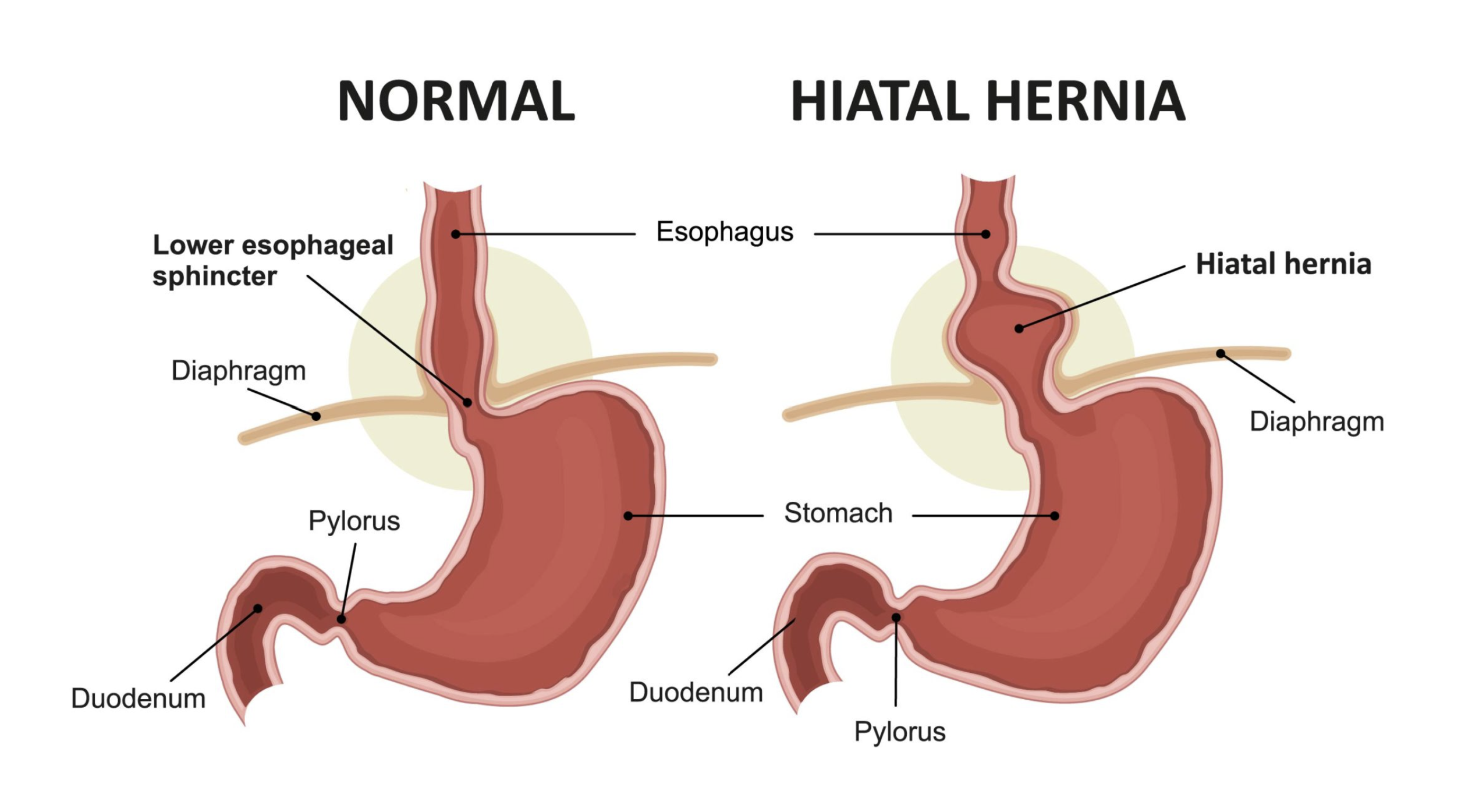
A hiatal hernia occurs when part of the stomach pushes up through the diaphragm into the chest cavity, disrupting the lower esophageal sphincter and creating chronic acid reflux, GERD, and digestive dysfunction. It affects over 20% of adults — and most are managed with acid-suppressing drugs that address symptoms, not causes.
A hiatal hernia occurs when the upper portion of the stomach herniates (pushes upward) through the hiatus — the opening in the diaphragm through which the esophagus normally passes. This disrupts the anatomical barrier between the stomach and esophagus, allowing acid and stomach contents to reflux freely.
The lower esophageal sphincter (LES) — the muscular valve that normally prevents acid from flowing back into the esophagus — relies partially on the diaphragm for mechanical support. When the stomach herniates above the diaphragm, this support is lost, and even a competent LES may fail to prevent reflux.
The condition is far more common than recognized — an estimated 55–60% of people over 50 have some degree of hiatal herniation, with the majority having no symptoms. However, when symptomatic, it creates a cascade of digestive dysfunction that affects quality of life profoundly.
The gastroesophageal junction and a portion of the stomach slide in and out of the chest through the hiatus. The hernia appears and disappears with position changes and intra-abdominal pressure. The most common type — causes GERD, heartburn, regurgitation, and chest discomfort. Responds well to dietary and positional interventions.
The gastroesophageal junction remains in position, but part of the stomach rolls up beside the esophagus. Less likely to cause acid reflux but more dangerous — the herniated stomach portion can become trapped, twisted (volvulus), or strangulated. May require surgical repair. Symptoms: chest pain, difficulty swallowing, early satiety, vomiting.
Symptoms are primarily driven by gastroesophageal reflux and impaired lower esophageal sphincter function.
Burning sensation in the chest or throat caused by acid refluxing into the esophagus — which lacks the protective mucus lining of the stomach. Worsens after meals, when lying down, bending forward, or with increased abdominal pressure (coughing, straining). The most common symptom, occurring in 80% of cases.
Sour or bitter fluid — gastric acid mixed with partly digested food — rising into the mouth or throat. Often worsens at night when lying flat, causing the "wet burps," bad breath, and damage to tooth enamel that are characteristic of chronic GERD.
Food getting stuck in the throat or chest — caused by esophageal inflammation (esophagitis), strictures from chronic acid damage, or mechanical obstruction from the herniated tissue. Requires urgent evaluation, particularly if accompanied by weight loss.
Acid microaspirations trigger airway irritation — causing a persistent dry cough (worse at night or in the morning), hoarseness, sore throat, and frequent throat clearing. Often misdiagnosed as allergies, asthma, or post-nasal drip when the actual driver is laryngopharyngeal reflux (LPR).
Excessive belching from swallowed air or fermentation; upper abdominal bloating from impaired gastric emptying. The herniated stomach segment may trap gas and create a sense of persistent upper abdominal fullness or pressure.
Esophageal spasm triggered by acid exposure causes chest pain that is indistinguishable from cardiac pain — a common ER presentation. The pain may radiate to the jaw, arms, or back. Always rule out cardiac causes first. Once confirmed non-cardiac, it is manageable with dietary and supplemental interventions.
Impaired gastric emptying from positional dysfunction of the stomach and vagal nerve irritation causes nausea — particularly in the morning or after large meals. In large paraesophageal hernias, vomiting can be severe and indicate a mechanical obstruction requiring urgent surgical attention.
Chronic irritation and micro-bleeding from the herniated gastric mucosa (Cameron erosions) causes slow, occult blood loss — leading to iron-deficiency anemia. Unexplained iron deficiency in a patient over 50 with reflux symptoms should prompt evaluation for hiatal hernia.
Hiatal hernia with chronic PPI use is a major risk factor for SIBO — acid suppression allows bacteria to colonize the small intestine. Over 60% of patients on long-term PPIs have SIBO. A lactulose or glucose breath test should be performed in all patients with bloating, gas, and non-responsive GERD symptoms.
Long-term acid suppression depletes: B12, magnesium, iron/ferritin, calcium, zinc. All patients on PPIs for more than 6 months should have these tested. Deficiencies explain many of the long-term complications of PPI therapy (bone loss, neuropathy, fatigue, immune dysfunction).
Measures the strength and coordination of esophageal muscle contractions and LES pressure. Identifies if low LES resting pressure, esophageal dysmotility, or achalasia is contributing to reflux symptoms. Required before anti-reflux surgery to ensure normal esophageal peristalsis.
Dietary triggers, meal timing, positional strategies, DGL licorice, aloe vera, digestive enzymes, gut healing
A sliding hiatal hernia — where the upper stomach periodically pushes up through the diaphragm opening — can often be mechanically encouraged back into its correct anatomical position using targeted manual pressure and gravity-assisted techniques. These approaches are used by specialized chiropractors and osteopaths, and can also be performed safely by the patient at home. They do not cure the underlying diaphragm weakness, but they relieve the acute herniation, reduce pressure on the LES, and provide immediate symptom relief.
This soft-tissue technique uses downward manual pressure just below the xiphoid process (the cartilage tip at the base of the sternum) to gently encourage the herniated stomach fundus back below the diaphragm. Best performed first thing in the morning on an empty stomach, when the abdomen is most relaxed and stomach volume is minimal.
Chiropractors and osteopaths trained in visceral manipulation (a specialized manual therapy technique developed by Jean-Pierre Barral, DO) can perform a more precise and effective version of the stomach relocation technique. A trained practitioner can:
Search for practitioners certified in Barral Visceral Manipulation or osteopaths with specific abdominal/visceral technique training. Many patients report substantial and lasting symptom relief after 3–6 sessions combined with home self-massage and dietary management.
This widely-used technique uses the weight and momentum of water in the stomach combined with a controlled gravity jolt to pull the stomach fundus downward through the diaphragmatic hiatus. It has been used by natural health practitioners for decades and many patients report immediate, dramatic relief from the sensation of pressure, tightness, and difficulty swallowing that accompanies an acute herniation.
The esophagus passes through the diaphragm via an opening called the hiatus. In a hiatal hernia, the upper portion of the stomach (the fundus) slides upward through this opening, pulled by intra-abdominal pressure, a shortened esophagus, or diaphragm weakness. The hiatus is elastic — a herniated stomach can be encouraged back through it with the right mechanical inputs.
The stomach in a hernia state is partially above the diaphragm — essentially weightless relative to abdominal gravity. Filling it quickly with 400–500ml of warm water creates 400–500g of gravitational pull, plus the warmth relaxes both the stomach's smooth muscle and the diaphragm's crural fibers around the hiatus — creating a window in which the weighted stomach can descend freely.
The heel drop / chair step creates a brief, high-amplitude gravitational force that exceeds normal hydrostatic pressure — generating enough downward momentum in the water-weighted stomach to overcome the slight resistance of the diaphragmatic hiatus and pull the herniated tissue back to its correct anatomical position below the diaphragm. The effect is immediate and often audibly confirmed by a stomach gurgle as contents settle.
Dietary management is the cornerstone of hiatal hernia treatment — both by reducing acid production and by controlling the mechanical pressure dynamics that allow the stomach to herniate.
Bananas, melons, oatmeal, fennel, ginger, leafy greens, cauliflower, asparagus. These foods are either non-acidic or create an alkaline ash during digestion, reducing esophageal acid exposure. Particularly helpful as the dominant food group during flares.
Chicken breast, fish (baked/steamed), egg whites, turkey. Lean proteins stimulate less gastric acid production than fatty meats and don't relax the LES the way high-fat meals do. Steam, poach, or bake — avoid frying which adds LES-relaxing fat.
Rich in glycine, proline, and gelatin — all of which directly support the repair of the esophageal and gastric mucosa. The gelatin forms a temporary protective coating on irritated tissues. Warm (not hot) bone broth before meals is a therapeutic pre-meal ritual for hiatal hernia healing.
Caffeine directly relaxes the lower esophageal sphincter — even in the absence of hiatal hernia. Combined with increased gastric acid stimulation, coffee is one of the most potent dietary GERD triggers. Both regular and decaf coffee cause LES relaxation via methylxanthines.
Three potent LES relaxants — avoid completely during active hernia management. Chocolate contains methylxanthines (like caffeine) and serotonin; both mint oils directly relax esophageal smooth muscle. The classic "healthy after-dinner mint" is counterproductive for hiatal hernia patients.
Tomatoes, tomato sauce, citrus fruits, vinegar-based foods, hot spices (capsaicin). These directly increase esophageal acid exposure and irritate already inflamed mucosa. Eliminate tomatoes and citrus entirely during the healing phase — they can be cautiously reintroduced once mucosal repair is confirmed.
Raw onions and garlic are potent reflux triggers for many patients (cooked forms are better tolerated). High-fat meals delay gastric emptying for 4–6 hours — prolonging acid production and the window for reflux. Switch to low-fat cooking methods during active treatment.
These supplements soothe inflamed mucosa, protect the esophagus from acid damage, restore LES tone, and address the underlying digestive dysfunction driving chronic reflux.
| Supplement | Role in Hiatal Hernia Management | Suggested Dose | Timing | Notes |
|---|---|---|---|---|
| DGL Licorice (Deglycyrrhizinated) | Stimulates mucus production in the esophageal and gastric lining — creating a thick protective barrier against acid damage. Accelerates the healing of esophageal erosions without suppressing acid (unlike PPIs). Also reduces H. pylori adhesion to the gastric mucosa and has mild anti-inflammatory effects on esophageal tissue. DGL form does not raise blood pressure. | 400–800mg chewable tablets, 2–3x/day | 20 minutes BEFORE meals and at bedtime — must be chewed for saliva to activate the mucosa-stimulating effect | Chewable form is essential — swallowed capsules do not stimulate esophageal mucosa. DGL is the safe form (glycyrrhizin removed). Whole licorice root raises BP — avoid for GERD use. |
| Slippery Elm Bark | Forms a thick, gel-like mucilage that coats and soothes the esophagus, stomach, and intestinal lining. The demulcent action creates a physical barrier between acid and the inflamed mucosa — providing immediate symptomatic relief while supporting mucosal regeneration. One of the oldest and most validated herbal remedies for GI inflammation. | 1–2 tsp powder mixed in warm water, 3x/day | Between meals and before bed | Powder form mixed in water creates the most effective mucilage. Capsule form is less effective. Safe for long-term use — also beneficial for IBD and leaky gut. |
| Aloe Vera Juice (Inner Leaf) | Contains acemannan and anthraquinone compounds that reduce esophageal and gastric inflammation, inhibit gastric acid secretion, and accelerate mucosal healing. A 2015 randomized controlled trial showed aloe vera syrup was as effective as ranitidine and omeprazole for reducing GERD symptoms — without side effects. | 2–4 oz before meals (inner leaf fillet juice only) | 15–20 minutes before meals | Inner leaf fillet ONLY — whole leaf contains aloin, a potent laxative. Choose decolorized, purified aloe vera juice. |
| Zinc Carnosine (PepZin GI) | A chelated compound of zinc and L-carnosine that is uniquely stable in the stomach — releasing slowly over 2+ hours in direct contact with the gastric mucosa. Accelerates gastric ulcer healing, reduces H. pylori virulence, protects against NSAID-induced damage, and strengthens the mucus barrier. The most effective mucosal repair supplement for the stomach and lower esophagus. | 75mg (PepZin GI) 2x/day | 30 minutes before meals | Well-validated in Japanese clinical trials. Superior to zinc alone. Also improves gastric motility and reduces H. pylori colonization without antibiotics. |
| Digestive Enzymes (with meals) | Incomplete protein and fat digestion leads to fermentation, excess gas production, and increased intra-abdominal pressure — all of which worsen LES pressure and hernia symptoms. Comprehensive digestive enzymes (including protease, lipase, amylase) ensure complete digestion in the stomach, preventing fermentation-driven gas buildup below the LES. | 1–2 capsules per meal | At the beginning of each meal | Avoid formulas with betaine HCl initially if esophagitis is active — HCl irritates inflamed esophageal tissue. Reintroduce HCl cautiously after mucosal healing. |
| D-Limonene | A natural compound from citrus peel that adheres to the esophageal and gastric mucosa, neutralizes acid, and stimulates normal peristalsis and mucus production. Clinical trials show significant GERD symptom reduction with 1g every other day for 20 days. Acts as a natural "coating agent" and normalizes gastric emptying — reducing the window for reflux. | 1,000mg every other day | With food (cycling protocol: 20 days on, then as needed) | Despite coming from citrus, d-Limonene does not increase acidity — it neutralizes it. Paradoxical but well-validated. Bioavailable only when taken with a fat-containing meal. |
| Magnesium Glycinate | Magnesium has mild prokinetic effects on the gut — stimulating gastric emptying and reducing the time food sits in the stomach fermenting. Reduces LES smooth muscle spasm. Magnesium depletion from PPI use is a major complication — repletion restores LES muscle function and prevents cardiac arrhythmia risk associated with hypomagnesemia. | 300–400mg elemental magnesium before bed | Before bedtime | Glycinate form has no laxative effect at this dose. If switching off PPIs, magnesium supplementation is essential from day one as rebound acid hypersecretion depletes magnesium further. |
| Vitamin B12 (Methylcobalamin) | Gastric acid is essential for B12 absorption — it cleaves B12 from food proteins and activates intrinsic factor production. Long-term PPI use causes clinically significant B12 depletion in 30–40% of users, leading to fatigue, neuropathy, mood disturbance, and dementia risk. Sublingual B12 bypasses the need for gastric acid entirely. | 1,000–2,000mcg/day (sublingual) | Morning, dissolve under tongue | Sublingual methylcobalamin is the only form that absorbs completely without stomach acid. Essential for all long-term PPI users — should be tested annually. |
Hiatal hernia and chronic GERD don't have to mean permanent medication. A functional approach — addressing mucosal healing, digestive support, and mechanical factors — can dramatically reduce symptoms and support safe medication tapering under physician guidance.