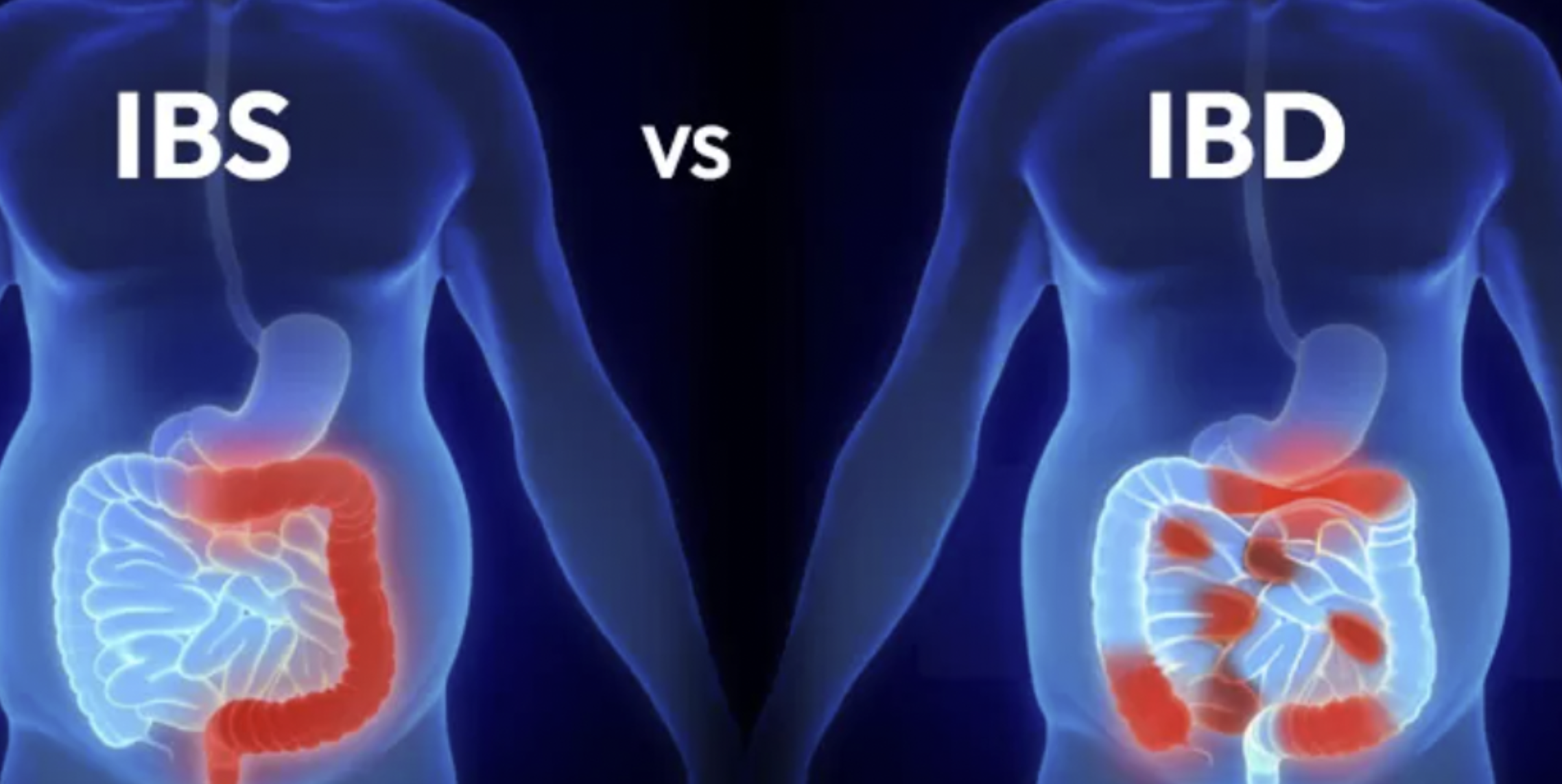
IBS & IBD

IBS affects 10–15% of the global population and is the most common gut diagnosis given — yet for 78% of sufferers, the true driver is untreated SIBO. IBD (Crohn's, UC) requires a deeper immune-modulating approach. Both respond powerfully to root-cause care.

10–15% Global Prevalence 78% Linked to SIBO Mind-Gut Axis Key

IBS vs. IBD — What's the Difference?

These two conditions are often confused, but they're fundamentally different in nature, diagnosis, and treatment approach.

IBS and IBD — gut inflammation and digestive health

IBS — Irritable Bowel Syndrome

Functional disorder — no structural damage visible on colonoscopy or imaging. Diagnosed by exclusion (Rome IV criteria).

  • IBS-C: Constipation-predominant (often methane SIBO)
  • IBS-D: Diarrhea-predominant (often hydrogen SIBO or bile acid malabsorption)
  • IBS-M: Mixed — alternating constipation and diarrhea
  • IBS-U: Unsubtyped
  • Affects motility, visceral sensitivity, gut-brain signaling
  • No tissue destruction — but significant quality of life impact

IBD — Inflammatory Bowel Disease

Inflammatory/autoimmune condition — causes measurable structural damage to the GI tract. Diagnosed with colonoscopy, biopsy, imaging.

  • Crohn's Disease: Can affect any part of the GI tract; transmural (full-wall) inflammation
  • Ulcerative Colitis (UC): Mucosal inflammation limited to colon and rectum
  • Microscopic Colitis: Inflammation visible only on biopsy
  • Active tissue destruction — ulcers, fistulas, strictures possible
  • Increased colorectal cancer risk with long-standing UC
  • Strong leaky gut and dysbiosis component
⚠️ The overlap problem: IBS and early IBD share many symptoms. IBS is often diagnosed when SIBO, Candida, or early IBD is the true driver. Never accept an IBS diagnosis without testing for SIBO (lactulose breath test), ruling out intestinal permeability, and comprehensive stool analysis.

IBS / IBD Statistics

15%
of the global population has IBS — 45 million in the US alone
3M+
Americans diagnosed with IBD (Crohn's or UC)
78%
of IBS patients have underlying SIBO as a primary driver
IBS Prevalence by World Region (%)
Symptom Overlap: IBS vs. SIBO vs. Candida (%)

IBS / IBD Symptom Profile

IBS and IBD share many overlapping symptoms but differ in severity and underlying mechanism. Understanding the distinction helps guide the correct treatment approach.

🫀 IBS Symptoms (Functional)

🫘

Bloating & Visible Abdominal Distension

The most universal IBS symptom. The abdomen visibly expands — often dramatically — after meals, especially carbohydrate-heavy ones. This is due to bacterial fermentation of unabsorbed carbohydrates producing excessive gas in the gut. In methane-dominant IBS (linked to methane SIBO), the bloating can be severe and persist for hours or days without relief.

😣

Abdominal Cramping & Pain

Cramping, spasming pain in the lower abdomen — often relieved by passing gas or having a bowel movement. Pain intensity ranges from mild discomfort to severe, debilitating cramping that interrupts daily activities. In IBS, the gut wall is hypersensitive (visceral hypersensitivity) — meaning normal gas pressure causes disproportionate pain. Stress and anxiety consistently worsen cramping through the gut-brain axis.

💧

Diarrhea (IBS-D) vs. Constipation (IBS-C)

IBS-D: Frequent loose or liquid stools with urgency, sometimes occurring immediately after meals. Often driven by hydrogen SIBO, bile acid malabsorption, or gut hypermotility. IBS-C: Infrequent, hard, difficult-to-pass stools with a sense of incomplete evacuation. Strongly linked to methane SIBO (methane gas directly slows gut motility). IBS-M: Unpredictable alternation between diarrhea and constipation — the most frustrating subtype.

🧠

Brain Fog, Anxiety & Depression

The gut-brain axis is severely disrupted in IBS. Gut dysbiosis reduces serotonin production (90% made in the gut), increases inflammatory cytokines that cross the blood-brain barrier, and dysregulates the HPA stress axis. Anxiety, depression, brain fog, and cognitive impairment are not secondary to having IBS — they are driven by the same root causes.

😴

Fatigue & Post-Meal Energy Crashes

The immune activation driven by gut dysbiosis, nutrient malabsorption (especially B12 and iron), and the metabolic cost of chronic inflammation all contribute to significant fatigue. Many IBS patients notice dramatic energy crashes after meals — particularly high-carbohydrate meals that feed fermentation. This is often misattributed to blood sugar issues but is primarily driven by gut-derived inflammation and bacterial toxin release.

🔥 IBD Symptoms (Inflammatory)

🩸

Rectal Bleeding & Blood in Stool

A hallmark of IBD (particularly Ulcerative Colitis) that distinguishes it from IBS. Active mucosal ulceration in the colon and rectum bleeds during bowel movements. Blood may be bright red (lower colon) or darker/mixed with stool (more proximal). Any blood in stool requires urgent medical evaluation — this symptom is not present in IBS.

🌡️

Fever, Night Sweats & Systemic Inflammation

Active IBD flares often cause low-grade to moderate fever (38–39°C), night sweats, and profound fatigue — reflecting systemic inflammatory activity not present in IBS. Inflammatory markers (CRP, calprotectin, ESR) are measurably elevated during flares. The presence of fever with gut symptoms is a red flag for IBD requiring medical investigation.

Mucus in Stool & Tenesmus

Significant mucus production with bowel movements is common in active UC and Crohn's colitis — the inflamed mucosa secretes excess mucus. Tenesmus (the constant urge to defecate even when the bowel is empty) is a characteristic and distressing symptom of rectal and distal colonic IBD that is absent in IBS.

🦴

Extraintestinal Manifestations

IBD is a systemic autoimmune condition that affects organs beyond the gut. Extraintestinal manifestations include: Joints (IBD-associated arthritis in 20–30%); Eyes (uveitis, episcleritis); Skin (erythema nodosum, pyoderma gangrenosum); Liver (primary sclerosing cholangitis — particularly in UC). These manifestations often flare in parallel with gut disease activity.

⚖️

Unintentional Weight Loss & Malnutrition

Active IBD significantly impairs nutrient absorption due to intestinal inflammation, mucosal damage, and reduced appetite during flares. Unintentional weight loss of 5–10% or more is common in moderate-to-severe Crohn's and active UC. Protein malnutrition, B12 deficiency (Crohn's affecting the terminal ileum), iron deficiency anemia, and fat-soluble vitamin depletion are all characteristic.

How to Test for IBS & IBD

IBS is a diagnosis of exclusion — but proper testing first rules out (or confirms) SIBO, IBD, and other treatable causes. IBD requires formal medical diagnosis.

🏠 At-Home Indicators

🍞 The FODMAP Challenge

Eat a high-FODMAP meal (bread, garlic, onion, beans, apples) and note symptoms 30–120 minutes later. Then eat a low-FODMAP meal (eggs, plain rice, cucumber, olive oil) and compare. If the high-FODMAP meal causes dramatic bloating, gas, cramping, or altered bowel habits while the low-FODMAP meal does not — bacterial fermentation of FODMAPs is a key driver, pointing to SIBO-driven IBS. This simple comparison is remarkably informative.

📋 IBS vs. IBD Red Flag Checklist

Symptoms suggesting IBS (functional): Symptoms worsen with stress, improve with bowel movements, vary by food, no blood in stool, normal blood markers. Red flags requiring urgent medical evaluation (possible IBD): Blood in stool, unintentional weight loss, fever, symptoms waking you from sleep, family history of IBD or colorectal cancer, onset after age 50. Any red flag warrants prompt colonoscopy referral.

😰 The Stress Connection Test

Track your symptoms relative to stress levels. IBS symptoms almost universally worsen with psychological stress, anxiety, poor sleep, or major life events — because of the gut-brain axis connection. Keep a 2-week log noting stress levels (1–10) and symptom severity. A strong correlation between stress and symptoms is a characteristic IBS feature and helps confirm the diagnosis while also revealing the mind-gut work needed.

🔬 Lab & Clinical Tests

💨 SIBO Breath Test (Lactulose or Glucose)

The single most important test for IBS sufferers. Given that 78% of IBS patients have underlying SIBO, a lactulose breath test (measuring H₂ and CH₄) should be the first investigation — before assuming functional IBS. A positive result completely changes the treatment approach. Available via mail-in kit (Trio-Smart, Commonwealth Diagnostics) or ordered by a gastroenterologist.

🩸 Comprehensive Blood Panel

Key markers: CBC (anemia — suggests IBD or nutrient malabsorption); CRP & ESR (elevated in IBD flares, normal in IBS); Calprotectin (stool test — elevated in IBD, normal in IBS — the best non-invasive IBD/IBS differentiator); Celiac antibodies (anti-tTG IgA) to rule out celiac disease; Thyroid panel (hypothyroidism mimics IBS-C).

🧬 GI-MAP Comprehensive Stool Test

Identifies the full gut ecosystem: pathogenic bacteria, H. pylori, Candida overgrowth, parasites, inflammatory markers (calprotectin, secretory IgA), digestive enzyme sufficiency, and zonulin (leaky gut marker). For IBS patients, this test often reveals the SIBO/Candida/parasitic infection driving the "functional" symptoms — completely changing the clinical picture. Ordered via functional medicine practitioners.

🔭 Colonoscopy & Biopsy (IBD Diagnosis)

Required for IBD diagnosis. Colonoscopy visualizes the colon and terminal ileum directly, revealing ulceration, inflammation, strictures, and fistulas. Biopsy samples confirm the histological pattern distinguishing Crohn's (transmural granulomatous inflammation) from UC (mucosal crypt abscesses). Capsule endoscopy may be used to visualize the small bowel in Crohn's. Always required if IBD red flags are present.

Holistic vs. Conventional Treatment

🌿 HOLISTIC
💊 CONVENTIONAL
🌿

Holistic / Functional Approach

Address SIBO/Candida root drivers, heal gut lining, support vagus nerve and stress response

For IBS
Test and treat SIBO/Candida; Low-FODMAP diet; probiotics; stress and vagus nerve work
For IBD
Anti-inflammatory diet (SCD or AIP); omega-3s; curcumin; leaky gut repair; microbiome restoration
Duration
3–12 months depending on severity; long-term dietary maintenance
Relapse Prevention
Diet & lifestyle maintenance significantly reduces flare frequency
IBS Holistic Protocol
  • SIBO testing (lactulose breath test) — treat if positive with herbal antimicrobials
  • Low-FODMAP diet for 4–8 weeks (elimination + structured reintroduction)
  • Peppermint oil enteric-coated capsules (IBgard) — antispasmodic for abdominal cramping
  • Gut lining repair: L-Glutamine, Zinc Carnosine, DGL Licorice
  • Multi-strain probiotics, especially Bifidobacterium infantis 35624
  • Vagus nerve stimulation: cold exposure, humming, breathing exercises, gargling
  • HPA axis support: Ashwagandha, Rhodiola, B vitamins, magnesium
IBD Additional Holistic Support
  • Specific Carbohydrate Diet (SCD) or Autoimmune Protocol (AIP) — removes all grain, dairy, processed food
  • Curcumin (1,000–3,000mg/day with piperine) — as effective as sulfasalazine in mild UC in some studies
  • Fish oil (EPA/DHA 3g+/day) — reduces leukotriene and prostaglandin inflammatory mediators
  • Butyrate enemas or oral supplementation for UC
  • Fecal microbiota transplant (FMT) showing promise in clinical trials for UC
✅ Well-tolerated with no systemic side effects. Addresses root drivers. Creates durable improvement in quality of life.

Diet Guidance for IBS & IBD

Low-FODMAP Diet (IBS)

Developed at Monash University. FODMAP stands for Fermentable Oligosaccharides, Disaccharides, Monosaccharides, And Polyols — rapidly fermenting carbohydrates that feed gut bacteria and trigger symptoms.

  • Phase 1 (4–8 weeks): Strict elimination of all high-FODMAP foods
  • Phase 2 (6–8 weeks): Structured reintroduction — test each FODMAP category individually
  • Phase 3: Personalized long-term diet based on identified triggers
  • 75% of IBS patients report significant improvement on Low-FODMAP
  • Not a permanent diet — diversity is essential for long-term microbiome health

Specific Carbohydrate Diet — SCD (IBD)

Originally developed by Dr. Sidney Haas; popularized by Elaine Gottschall for IBD. Removes all complex carbohydrates that feed pathogenic gut bacteria.

  • Allowed: Simple (monosaccharide) sugars only; meat, fish, eggs, most vegetables, nuts, honey
  • Removed: All grains, most legumes, sucrose, lactose, starchy vegetables, processed foods
  • SCD has achieved clinical remission in pediatric Crohn's in multiple studies
  • Autoimmune Protocol (AIP) is a deeper elimination that also removes eggs, nightshades, nuts
  • Combine with mucosal repair nutrients for best outcomes in IBD

The Mind-Gut Connection

The gut and brain communicate bidirectionally via the vagus nerve, the enteric nervous system ("second brain"), and the HPA (stress) axis. This means gut health profoundly affects mental health — and vice versa.

Gut-Brain Bidirectional Signaling

😰
Chronic Stress HPA axis activation
Cortisol Release Increases gut permeability
🫀
Gut Dysbiosis Disrupts microbiome
🧠
Neuroinflammation Anxiety, depression, fog
↕ Bidirectional
🦠
Gut Dysbiosis LPS, toxins
🔥
Systemic Inflammation Cytokines cross BBB
😔
Mood & Cognition 90% serotonin made in gut
Vagus Nerve Tone ↓ Worsens gut motility
🫀

The Vagus Nerve

The vagus nerve is the superhighway of the gut-brain connection. Stimulating it with breathwork, cold therapy, humming, and gargling improves gut motility, reduces inflammation, and calms the nervous system.

90% of Serotonin

The gut produces 90–95% of the body's serotonin via enterochromaffin cells. Dysbiosis directly impairs serotonin synthesis — linking gut health to mood, sleep, and pain perception.

🧘

HPA Axis Healing

Chronic stress perpetuates IBS/IBD by keeping the HPA axis in overdrive. Adaptogens (Ashwagandha, Rhodiola), magnesium, and mindfulness practices are therapeutic interventions, not optional extras.

Key Supplements for IBS & IBD

These supplements address the root drivers of IBS and IBD — reducing inflammation, repairing the gut lining, restoring the microbiome, and supporting the gut-brain axis.

SupplementIBS BenefitIBD BenefitSuggested DoseTiming & Notes
L-GlutamineRepairs leaky gut driving IBS symptoms; reduces visceral hypersensitivity by healing the gut wallCritical for mucosal repair in active Crohn's and UC; directly heals ulcerated intestinal lining5–15g/dayFasted morning or between meals as powder in water
Peppermint & Lemon OilEnteric-coated peppermint oil is one of the most evidence-backed IBS treatments — powerful antispasmodic, reduces cramping and bloating significantlyUse cautiously — may worsen heartburn in some IBD patients; anti-inflammatory properties beneficial0.2mL peppermint (enteric-coated) 2–3x/day30–60 min before meals; MUST be enteric-coated (IBgard) to reach small intestine
Saccharomyces BoulardiiRestores microbiome diversity; competes with SIBO/Candida bacteria; reduces IBS bloating; reduces intestinal permeabilityModulates IBD-associated immune dysregulation; reduces inflammatory cytokines; supports remission maintenance5–10 billion CFU/dayBetween meals; safe during antimicrobial treatment
BerberineTreats underlying SIBO driving IBS; improves gut motility; reduces pathogenic bacteria colonization in small intestineAnti-inflammatory; reduces colonic bacterial overgrowth contributing to IBD flares; improves epithelial barrier function500mg 2–3x/dayWith meals; monitor blood sugar in diabetics
Curcumin (Turmeric Extract)Reduces visceral hypersensitivity; downregulates NF-kB gut inflammation; modulates gut microbiome compositionMultiple clinical trials show efficacy comparable to mesalamine for mild UC; powerful IBD anti-inflammatory1,000–3,000mg/day with 20mg piperineWith fat-containing meals; liposomal form preferred for maximum absorption
Omega-3 Cod Liver Fish OilReduces gut hypersensitivity and inflammation; supports gut-brain axis; reduces anxiety associated with IBSReduces leukotriene B4 and prostaglandin inflammatory pathways; clinical evidence for IBD remission maintenance2–3g combined EPA+DHA/dayWith meals; IFOS-certified; cod liver oil also provides Vitamins A & D
Digestive EnzymesSupports complete carbohydrate, protein, and fat digestion — reducing fermentation substrate for SIBO bacteria and relieving IBS bloatingReplaces enzymes impaired by intestinal inflammation; reduces food antigen load triggering immune responses1–2 capsules per mealStart of each meal; broad-spectrum formula
Aloe Vera JuiceSoothes the gut wall; reduces visceral hypersensitivity; mild laxative effect for IBS-C; anti-inflammatoryReduces colonic inflammation; promotes mucosal healing in UC; soothes ulcerated intestinal wall2–4 oz/dayMorning fasted or before meals; inner leaf only
Milk Thistle (Silymarin)Supports liver processing of gut-derived toxins; reduces systemic inflammation from dysbiosis-associated LPSHepatoprotective — important as IBD biologics (and the disease itself) increase liver stress; anti-inflammatory systemically300–600mg/dayWith dinner; standardized 80% silymarin extract
TUDCAImproves bile flow and fat digestion impaired in IBS-D; reduces gut inflammation; liver supportBile acid dysregulation is a key IBD driver; TUDCA normalizes bile acid pool; reduces hepatic complications of IBD250–500mg/dayWith fat-containing meals; synergistic with Milk Thistle
NAC (N-Acetyl Cysteine)Disrupts bacterial biofilms driving SIBO-associated IBS; replenishes glutathione depleted by chronic inflammationReduces oxidative stress in inflamed intestinal mucosa; thins excess mucus in IBD; supports glutathione in mucosal immune defense600–1,200mg/dayBetween meals for biofilm action; with meals reduces GI upset
Magnesium GlycinateReduces IBS-associated anxiety and stress response via HPA axis regulation; supports hundreds of gut repair enzymes; gentle muscle relaxant for gut spasmsProfoundly depleted in IBD due to malabsorption and diarrhea; essential for intestinal motility regulation and mucosal healing300–500mg/dayBefore bed; glycinate is best-absorbed, gentlest form
Magnesium CitrateIBS-C: gentle osmotic laxative that draws water into the bowel, softens stools, and improves transit time for constipation-dominant IBSUseful for IBD patients with constipation (Crohn's strictures); replenishes magnesium lost in diarrhea during flares200–400mg/dayBefore bed or with dinner; reduce dose if loose stools occur
Vitamin D3 — 10,000 IUVitamin D deficiency is extremely common in IBS; D3 regulates gut immune responses, tight junction proteins, and reduces visceral hypersensitivityVitamin D deficiency strongly linked to IBD severity and flare frequency; D3 modulates Th17/Treg balance critical to IBD autoimmunity10,000 IU/dayWith fat-containing meal; always pair with K2 MK-7; monitor blood levels — target 60–80 ng/mL
Vitamin K2 (MK-7)Works with D3; reduces systemic inflammation; supports bone density (often low in IBS due to nutrient malabsorption)IBD patients have significantly elevated osteoporosis risk; K2 directs calcium to bone; reduces inflammation via osteocalcin pathway200–400 mcg/day (MK-7)With fat meal; same time as D3
Zinc L-CarnosineRepairs intestinal mucosa damaged by gut dysbiosis; reduces visceral hypersensitivity; heals tight junctionsAccelerates mucosal healing in UC and Crohn's; reduces ulceration; inhibits H. pylori often present in IBD75–150mg/day (PepZin GI)With or between meals; PepZin GI is the standardized form
Prokinetic — Ginger Root or 5-HTPRestores MMC function impaired in SIBO-driven IBS; stimulates serotonin-mediated peristalsis; reduces IBS-C transit timeGinger reduces IBD-associated nausea and inflammation; 5-HTP supports serotonin production often impaired in IBDGinger: 500–1,000mg; 5-HTP: 50–100mgBefore bed on empty stomach; do not use 5-HTP with SSRIs
Activated CharcoalBinds bacterial endotoxins and gas in the gut — provides fast symptomatic relief for bloating and gas in IBS; absorbs fermentation byproductsAdsorbs mycotoxins and endotoxins circulating from inflamed IBD gut wall; reduces toxic load during flares1,000–2,000mg as neededBetween meals; 2+ hours away from ALL medications and supplements; use in cycles (2–4 weeks), not continuously
Apple Cider Vinegar (ACV)Restores stomach acid essential for proper digestion; reduces SIBO risk by creating acidic environment hostile to bacteria; mild antimicrobialSupports bile flow and digestion; use cautiously in active IBD — the acidity may irritate active ulcerations. Introduce slowly.1–2 tbsp in water before mealsRaw, unfiltered with "mother"; dilute well to protect teeth and esophagus
Copper BisglycinateSupports collagen synthesis for gut wall structural integrity; balances zinc supplementation; supports immune functionOften depleted in IBD; essential for ceruloplasmin (antioxidant in gut); bisglycinate form is highly bioavailable and gentle2–4 mg/dayWith meals; away from high-dose zinc; maintain ~10:1 zinc-to-copper ratio

Stop Managing IBS. Start Resolving It.

Whether you have IBS, IBD, or aren't sure what's driving your symptoms, a root-cause investigation changes everything.