The most commonly overlooked driver of IBS, chronic bloating, and gut dysfunction. Up to 84% of IBS patients have SIBO — yet it's rarely tested for or correctly treated.
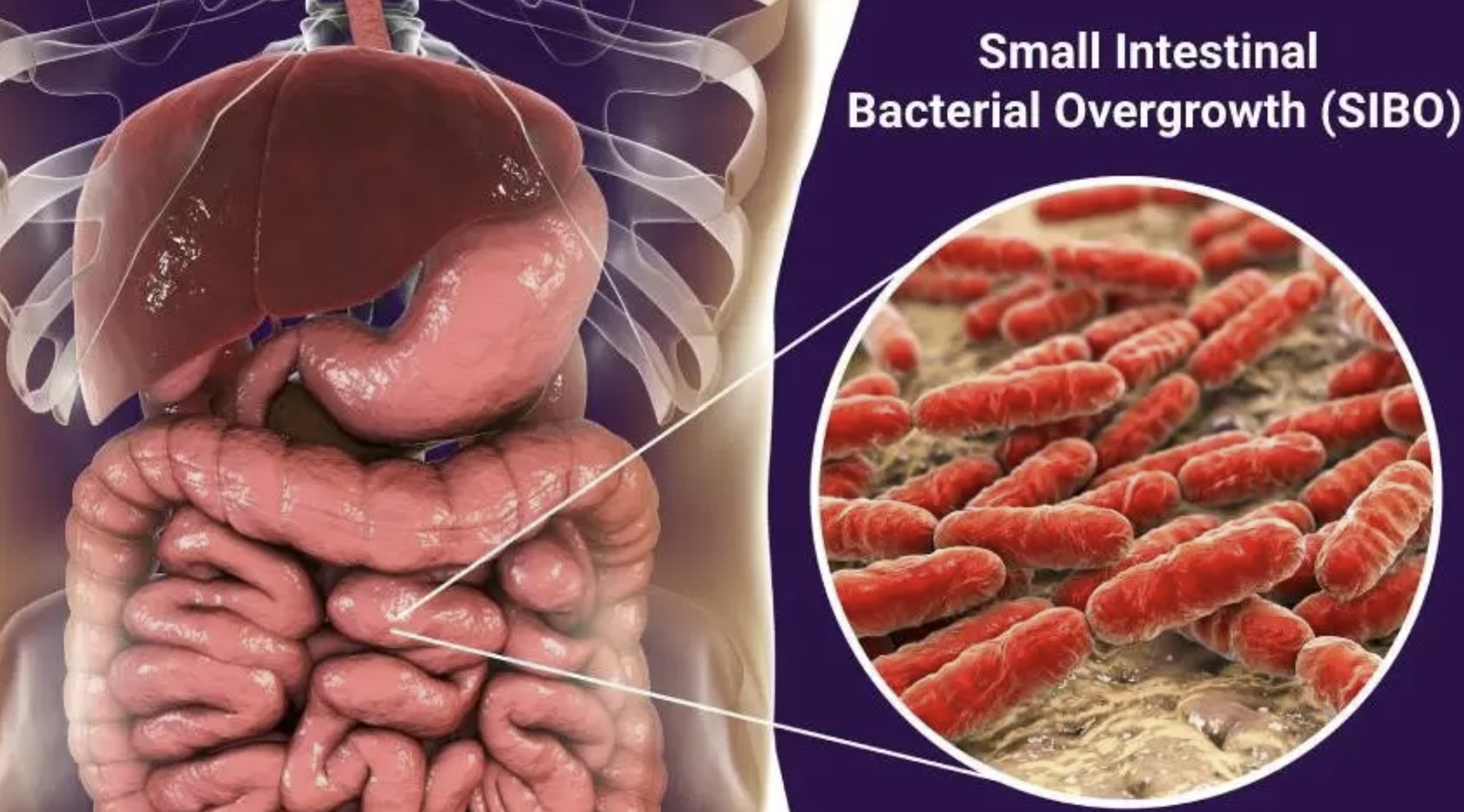
SIBO occurs when bacteria that normally live in the large intestine migrate and overpopulate the small intestine — where they don't belong.
The small intestine is meant to be relatively sterile, with fewer than 1,000 bacteria per milliliter. In SIBO, this rises to millions. These bacteria ferment carbohydrates prematurely, producing excessive gas, damaging the intestinal lining, interfering with nutrient absorption, and creating systemic inflammation.
There are three distinct subtypes based on the gas produced by the overgrown organisms. Each subtype presents differently and requires a tailored treatment approach:
The most common type, affecting approximately 50% of SIBO cases. Caused by gram-negative bacteria such as Escherichia coli, Klebsiella, and Proteus species that ferment carbohydrates and release hydrogen gas as a byproduct.
The newest recognized subtype, produced by sulfur-reducing bacteria such as Desulfovibrio species. Only identifiable with specialized tri-gas breath testing (standard tests miss it). Estimated 15% of SIBO cases but likely underdiagnosed.
"Up to 84% of patients with IBS test positive for SIBO on lactulose breath testing."
— Pimentel et al., American Journal of GastroenterologySymptoms often worsen 30–90 minutes after eating as bacteria ferment food, producing gas and triggering the immune response. SIBO is a full-body condition — not just a gut problem.
The stomach visibly expands within minutes to hours of eating — particularly after carbohydrates, fiber, or fermentable foods. Gas production from bacterial fermentation causes the abdomen to distend painfully. Many patients describe looking "6 months pregnant" after meals.
Uncontrollable flatulence and belching driven by bacterial fermentation. The gas may smell foul (sulfurous in H₂S SIBO) or be odorless. Gas production can be so extreme it is audible.
H2-SIBO: Loose stools, urgency, and explosive diarrhea — especially after meals. Methane SIBO: Severe constipation, incomplete evacuation, pellet-like stools. Mixed SIBO: Alternating between both extremes without predictability.
Cramping, sharp, or dull aching pain in the lower abdomen, often relieved temporarily by passing gas or having a bowel movement. Pain can be constant in severe cases and is often worse in the afternoon and evening.
Persistent low-grade nausea, particularly after meals. Some patients develop fear of eating due to predictable post-meal symptoms. Early satiety — feeling full after only a few bites — is also common.
SIBO causes progressive food intolerances as the bacteria damage enzyme-producing cells in the small intestine. Lactose intolerance, histamine intolerance, fructose malabsorption, and gluten sensitivity all worsen with untreated SIBO.
One of the most debilitating symptoms. SIBO bacteria produce D-lactic acid and other neurotoxins that cross the blood-brain barrier. Patients report difficulty concentrating, word-finding problems, memory lapses, mental slowness, and feeling "drunk" after meals.
SIBO bacteria steal nutrients (especially B12, iron, and fat-soluble vitamins) before the body can absorb them. Resulting deficiencies cause profound fatigue, poor stamina, inability to exercise, and post-exertional malaise. Many SIBO patients are misdiagnosed with Chronic Fatigue Syndrome.
90% of serotonin is produced in the gut. SIBO disrupts enterochromaffin cells that synthesize serotonin, directly affecting mood, anxiety, and stress tolerance. Bacterial toxins also trigger systemic inflammation that worsens depression and anxiety independently.
Bacterial endotoxins (LPS — lipopolysaccharides) leaking through a damaged gut wall trigger systemic inflammation, causing joint pain, muscle aches, and stiffness that mimic arthritis. Often worse in the morning and after meals.
Rosacea has a remarkably strong association with SIBO — studies show SIBO is 10x more prevalent in rosacea patients than controls. Eczema, acne, psoriasis, and hives can all flare with active SIBO due to gut-skin axis inflammation and circulating toxins.
SIBO impairs absorption of fat-soluble vitamins (A, D, E, K), B12, iron, and essential fatty acids. This causes anemia, osteoporosis risk, hormonal disruption, and immune weakness. Unexplained weight loss (malabsorption) or weight gain (metabolic disruption from methane) are both possible.
Testing is important before committing to an antimicrobial protocol — knowing your subtype determines which herbs will be most effective.
These aren't diagnostic, but strong symptom patterns can guide your next steps before investing in formal testing:
Eat a high-carbohydrate meal (rice, bread, pasta, fruit) and note how you feel 30–90 minutes later. Significant bloating, gas, cramping, or brain fog appearing in this window strongly suggests SIBO. Compare to how you feel after a protein-and-fat-only meal — if that meal causes no symptoms, the pattern points to carbohydrate-driven bacterial fermentation.
Notice whether your abdomen is significantly flatter in the morning (after 10–12 hours of fasting) compared to after meals. If there is a dramatic difference — flat when fasted, very distended after eating — bacterial fermentation of food is the likely cause. Persistent bloating even while fasted suggests more chronic inflammation or constipation-dominant SIBO.
Score 1 point for each: chronic bloating, gas within 2 hours of eating, IBS diagnosis, constipation OR diarrhea, brain fog after meals, fatigue, multiple food intolerances, prior antibiotic use, low B12 or iron with no explanation, rosacea or unexplained skin condition. Score of 5+ strongly suggests SIBO and warrants formal testing.
Toggle between the two approaches to compare treatments, outcomes, and what each looks like in practice.
Address root cause, restore motility, eliminate bacteria naturally
Bacteria overgrow in the small intestine when the body's natural defenses break down. Understanding which applies to you is essential for lasting recovery.
| Root Cause | How It Contributes to SIBO | Holistic Solution |
|---|---|---|
| Low Stomach Acid (Hypochlorhydria) | Stomach acid kills bacteria before they enter the small intestine. Low HCl = bacteria survive transit. | Betaine HCl + Pepsin, Apple Cider Vinegar, zinc, reduce PPIs |
| Impaired Migrating Motor Complex (MMC) | MMC sweeps bacteria from small intestine between meals. Dysfunction = bacteria accumulate. | Prokinetics: Ginger, 5-HTP, Low Dose Naltrexone, intermittent fasting (no snacking) |
| Prior Antibiotic Use | Antibiotics disrupt protective bacteria, allowing SIBO-causing strains to flourish. | Probiotics, fermented foods, prebiotic diversity, S. boulardii |
| Chronic Stress | Stress slows gut motility via the vagus nerve and HPA axis. Bacteria colonize stagnant bowel. | Vagus nerve exercises, breathwork, adaptogenic herbs, nervous system support |
| Abdominal Surgery / Adhesions | Scar tissue disrupts normal gut motility and anatomy. | Castor oil packs, visceral massage, motility agents, low-residue diet phases |
| Hypothyroidism / Slow Motility | Thyroid hormones regulate gut motility. Hypothyroid = slower transit = more bacterial growth time. | Optimize thyroid (T3/T4), selenium, iodine, reduce goitrogens |
| Ileocecal Valve Dysfunction | ICV is the barrier between large and small intestine. Dysfunction allows backflow of colon bacteria. | Chiropractic adjustment, massage, dietary fiber balance |
Food directly feeds the bacteria causing your symptoms. The right diet starves the overgrowth while nourishing healing.
FODMAP stands for Fermentable Oligosaccharides, Disaccharides, Monosaccharides, And Polyols. These are short-chain carbohydrates that are poorly absorbed in the small intestine — meaning instead of being digested and absorbed by you, they travel further into the gut where bacteria ferment them, producing gas, bloating, and cramping.
In a healthy gut, this is relatively manageable. In SIBO, where bacteria are already overpopulated in the small intestine, FODMAPs are fermented immediately and excessively — causing severe, predictable post-meal symptoms.
These supplements work synergistically — antimicrobials eliminate the overgrowth, gut-repair nutrients rebuild the lining, and motility agents prevent relapse. Timing matters for each.
| Supplement | Role in SIBO Recovery | Suggested Dose | Timing | Notes |
|---|---|---|---|---|
| L-Glutamine | Primary fuel for gut lining cells (enterocytes). Directly repairs tight junctions damaged by SIBO bacteria and reduces intestinal permeability (leaky gut) caused by overgrowth. | 5–10g/day | Fasted — morning or between meals | Powder form best; dissolve in water |
| NAC (N-Acetyl Cysteine) | Breaks down bacterial biofilms that protect SIBO organisms from antimicrobial treatment. Also replenishes glutathione — the body's master antioxidant — depleted during gut inflammation. | 600–1,200mg/day | 30–60 min before antimicrobial dose | Take on empty stomach for biofilm action; avoid in H₂S SIBO initially |
| Milk Thistle (Silymarin) | Protects the liver as it processes the toxins (LPS, aldehydes) released when SIBO bacteria die. Silymarin supports Phase I and II liver detoxification pathways critical during treatment. | 300–600mg/day | With dinner or before bed | Use standardized extract (70–80% silymarin) |
| TUDCA (Tauroursodeoxycholic Acid) | A bile acid that improves bile flow, supports liver health, reduces gut inflammation, and helps break down bacterial endotoxins (LPS). Particularly useful when fat malabsorption or liver stress is present. | 250–500mg/day | With meals containing fat | Powerful liver & bile support; synergistic with Milk Thistle |
| Aloe Vera Juice | Soothes and coats the inflamed intestinal lining. Contains acemannan — a polysaccharide with anti-inflammatory and antimicrobial properties. Reduces gut wall irritation caused by SIBO-related inflammation. | 2–4 oz/day | Morning fasted or before meals | Use inner leaf fillet only (not whole leaf — contains aloin, a laxative) |
| Apple Cider Vinegar (ACV) | Increases stomach acid naturally (acetic acid). Low stomach acid is a primary root cause of SIBO — bacteria survive transit into the small intestine when HCl is insufficient. ACV also has mild antimicrobial properties. | 1–2 tbsp in water | 15 minutes before meals | Raw, unfiltered with the "mother." Dilute well to protect tooth enamel. |
| Saccharomyces Boulardii | A beneficial probiotic yeast that survives the hostile SIBO environment and competes with pathogenic organisms. Reduces intestinal permeability, supports the immune response, and helps restore microbiome balance after antimicrobial treatment. | 5–10 billion CFU/day | Between meals; away from antimicrobials (2+ hrs) | Safe during antimicrobial treatment as it is a yeast, not bacteria |
| Digestive Enzymes | Supports complete digestion of food so undigested carbohydrates, proteins, and fats don't reach SIBO bacteria for fermentation. Replaces enzymes that SIBO bacteria displace from intestinal brush border cells. | 1–2 capsules per meal | At the start of every meal | Choose broad-spectrum: protease, lipase, amylase, lactase, cellulase |
| Oregano Oil | Contains carvacrol and thymol — potent antimicrobial compounds effective against a wide range of gram-positive and gram-negative bacteria. One of the most effective herbal antimicrobials for SIBO. | 100–200mg/day (carvacrol standardized) | With meals; enteric-coated preferred | Enteric-coated capsules ensure delivery to the small intestine |
| Allicin (Garlic Extract) | The active antimicrobial compound in garlic. Particularly effective against methane-producing archaea (M. smithii). Allicin also has strong anti-biofilm and anti-inflammatory properties. Studies show comparable efficacy to Rifaximin + Neomycin for methane SIBO. | 450–900mg/day (allicin-stabilized) | With meals | Must be stabilized allicin extract (Allimax/Allimed) — garlic capsules do not provide therapeutic allicin levels |
| Berberine | A plant alkaloid with broad antimicrobial activity against both SIBO-causing bacteria and Candida. Berberine inhibits bacterial adhesion to intestinal cells, reduces inflammation, and improves insulin signaling (which affects gut motility). | 500mg 2–3x/day | With meals | Space doses throughout day; can lower blood sugar — monitor if diabetic |
| Neem Extract | Azadirachtin and other neem compounds disrupt bacterial cell membranes and inhibit bacterial replication. Neem has been used traditionally for gut infections and demonstrates activity against biofilm-forming bacteria. | 300–600mg/day | With meals | Often combined with Berberine and Oregano for synergistic effect |
| Black Walnut Extract | Juglone (active compound) is a powerful antimicrobial and antiparasitic agent effective against bacteria, fungi, and intestinal parasites that often co-exist with SIBO. Part of the classic "parasite cleanse" trio. | 500–1,000mg/day | With meals | Classic combination: Black Walnut + Wormwood + Clove — the anti-pathogen trio |
| Wormwood (Artemisia absinthium) | Contains artemisinin and absinthin — compounds with documented antimicrobial, antiparasitic, and anti-biofilm properties. Effective against multiple SIBO-associated pathogens and often used when parasite co-infection is suspected. | 200–400mg/day | With meals | Do not use for more than 6 weeks continuously; rotate with other antimicrobials |
| Clove Extract | Eugenol (active compound in cloves) disrupts bacterial cell walls, inhibits biofilm formation, and has demonstrated activity against multiple pathogenic organisms. The third component of the classic antiparasitic trio alongside Black Walnut and Wormwood. | 500mg/day | With meals | Particularly effective against parasite eggs and larvae — use alongside Black Walnut and Wormwood |
| Ceylon Cinnamon | Cinnamaldehyde inhibits bacterial growth and biofilm formation. Ceylon cinnamon (not Cassia) also helps regulate blood sugar — reducing the carbohydrate fuel available to SIBO bacteria. Mild prokinetic properties as well. | 1–2g/day (Ceylon only) | With meals or in morning beverage | Must be Ceylon ("true") cinnamon — NOT Cassia cinnamon, which contains harmful levels of coumarin |
| Peppermint & Lemon Oil | Enteric-coated peppermint oil is one of the most evidence-backed treatments for IBS-type symptoms associated with SIBO — acting as a powerful antispasmodic and antimicrobial in the small intestine. Lemon oil has antimicrobial and anti-inflammatory properties. | 0.2mL peppermint oil (enteric-coated) 3x/day | 30–60 min before meals | Must be enteric-coated to reach the small intestine; plain peppermint capsules dissolve in the stomach |
| Prokinetic — Ginger Root or 5-HTP | Stimulates the Migrating Motor Complex (MMC) — the wave of contractions that sweeps bacteria out of the small intestine between meals. MMC dysfunction is a primary root cause of SIBO. Prokinetics prevent relapse by restoring this essential "housekeeper" function. | Ginger: 500–1,000mg; 5-HTP: 50–100mg | Before bed on empty stomach | Critical for SIBO prevention and relapse prevention. Do not take 5-HTP with SSRIs. |
| Curcumin (Turmeric Extract) | Potent anti-inflammatory compound that reduces the intestinal inflammation caused by SIBO. Curcumin downregulates NF-kB (the master inflammation switch), reduces gut wall damage, and supports liver detoxification of bacterial toxins. | 500–1,000mg/day | With meals containing fat | Must include piperine (black pepper extract) or be liposomal for absorption — plain curcumin is poorly bioavailable |
| Omega-3 Cod Liver Fish Oil | EPA and DHA reduce the systemic and intestinal inflammation driven by SIBO bacterial endotoxins (LPS). Omega-3s also support the gut-brain axis, reduce anxiety associated with SIBO, and help restore the cell membrane integrity of gut lining cells. | 2–3g combined EPA+DHA/day | With meals | Cod liver oil also provides Vitamins A & D — avoid very high doses if also supplementing these separately. Choose IFOS-certified for purity. |
Understanding what to expect from each approach helps set realistic expectations and make informed choices.
Die-off reactions possible. Begin Low-FODMAP diet. Start gut lining support.
Herbal antimicrobials in full swing. Bloating and gas begin to reduce noticeably.
Significant symptom improvement. Begin reintroducing foods. Address root causes.
Full resolution in many cases. Microbiome restoration with probiotics & diverse diet.
~15% when root causes addressed
Rifaximin course. Symptoms may improve during course.
Symptom relief for many patients. No dietary or root-cause guidance.
Gradual symptom return for most. Second course often prescribed.
Repeat courses. Microbiome increasingly disrupted. Diminishing returns.
44% within 9 months; up to 70% within 2 years
Book a free discovery call to discuss your SIBO history and what a personalized holistic protocol might look like for you.